Liner Notes After Dark / NO. 004
The friends who could no longer play with him, the songs he still wanted to make, and the sister who kept his pictures.
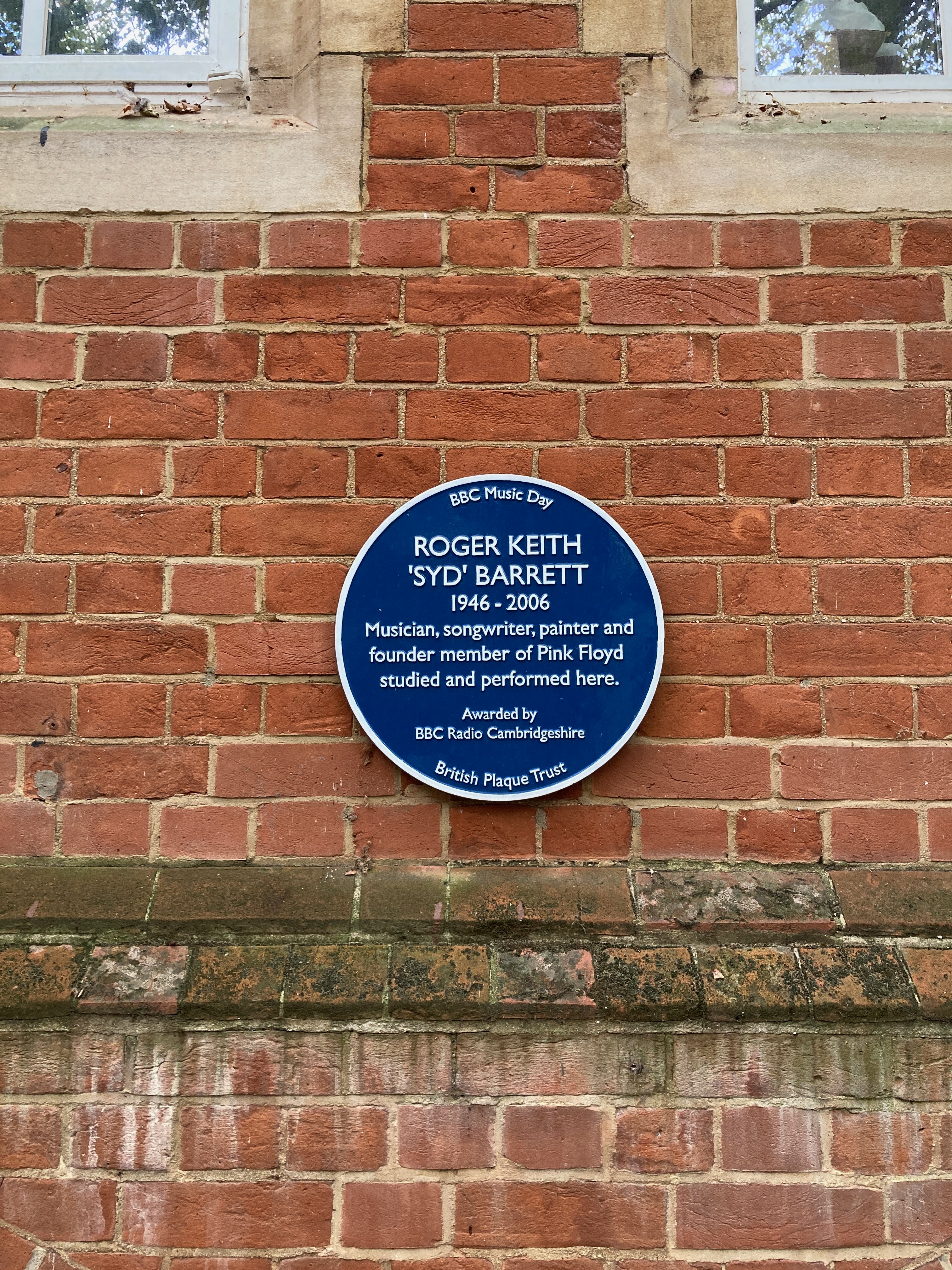
By Margin Tone
Syd Barrett was Pink Floyd’s original singer, guitarist and principal songwriter. His songs had given the band its first hits; by early 1968, they were finding ways to play without him. Rick Wright, who shared his flat in Richmond, remembered leaving for gigs and telling Barrett he was going out for cigarettes. “It was awful,” he told MOJO in 1994. David Gilmour had joined, and the attempt to carry on with both guitarists was failing. They hadn’t found a way to tell their friend.
Barrett was twenty-two. Before the band, there had been art school in Cambridge and London, and music at home: at seven, he and his younger sister Rosemary had won a piano duet competition. He knew Roger Waters from school and Gilmour from his teenage years. The friendships, like the painting, belonged to a life that hadn’t started with Pink Floyd and wouldn’t end with his departure.
In the early studio sessions, producer Joe Boyd remembered Barrett as “a quiet leader.” Waters did more talking, but the others deferred to Barrett’s opinion. Nick Mason later recalled how fully formed “Arnold Layne” had been before they recorded it with Boyd and engineer John Wood. Barrett could give them a single as well as the long, exploratory music they played onstage. The pastoral songs and heavier pieces on The Piper at the Gates of Dawn, released in August 1967, came from the same writer.
Success also made him the person from whom more was wanted. Manager Peter Jenner remembered the demands piling up in the summer of 1967: another hit after “See Emily Play,” television, interviews, photographs. Barrett walked out of a BBC recording that July, and a German television appearance was cancelled in August. His managers announced that he was exhausted and needed rest. The first album was arriving while the work of promoting it was breaking down.
Jenner described an attempt to keep Barrett writing while taking him off the road, following the Beach Boys’ example. Bringing in Gilmour began as a way of making that possible. But the gigs continued. Mason later remembered giving Barrett two days off after a painful American trip and then resuming in Europe. After a handful of shows with both guitarists, they stopped collecting him. “I still remember exactly how relieved we were when we didn’t pick him up,” Mason said. The relief continued to surprise him.
Looking back after Barrett’s death, Mason could name possible pressures, including LSD use and distress at the commercial life, without offering a settled explanation. “To this day none of us knows,” he wrote in Time. He thought they’d been too busy, and too much in denial, to try properly to understand.
Gilmour had swapped guitar tips with Barrett and gone busking with him in France. Being able to reproduce his parts didn’t make replacing him comfortable. “Obviously, I felt both shy and nervous about replacing him,” he told MOJO in 2007. Yet the musical relationship didn’t stop there. Gilmour would help Barrett make records under his own name, and Wright would play on his songs again.
By April 1969, Barrett was recording with EMI producer Malcolm Jones. One evening remained especially happy in Jones’s account: several songs took shape quickly, and the basic guitar-and-vocal performance of “Terrapin” arrived in one take. In the cab home they discussed more work. Barrett said he would bring musicians to the next session.
Other sessions were harder. Accompanists didn’t always know when another verse would begin, and Jones wished he’d given the Soft Machine musicians more rehearsal time. He’d assumed Barrett would pass on tapes for them to practise with; Barrett had kept them. Jones took responsibility for some ragged backing performances. His recollection allows for the exasperation without losing the reason they were there: he wanted to get Barrett back on record, and remained particularly fond of “Opel,” even though it didn’t make the album.
The Madcap Laughs appeared in January 1970. Barrett told Chris Welch in Melody Maker that he was still writing, still interested in putting a band together. He had reservations about the record. “I like to have really exciting, colourful songs,” he said. A second album, Barrett, followed that November, with Gilmour and Wright credited as producers and Jerry Shirley on drums.
Mick Rock’s interview published in December 1971 gives that wish a particular shape. Barrett had a folder of neatly typed songs to show him. There was a new twelve-string Yamaha, polished the day before. He played a revised “Love You,” which he’d also been working on the previous day, and thought it better. His answers could be disjointed; he was frustrated by the lack of work. But he wanted Rock to stay long enough to see the songbook. “I think it’s so exciting. I’m glad you’re here,” he said.
Stars, his brief band with drummer Twink and bassist Jack Monck, followed in Cambridge in 1972. It didn’t last. In 1975, he visited Pink Floyd during the Wish You Were Here sessions. Mason remembered playing him a couple of tracks; Barrett stayed a while and left. Mason never saw him again. Barrett was twenty-nine. Another thirty-one years of his life lay ahead.
By 1981 he was living in his mother’s Cambridge house and using Roger again. Rosemary visited or phoned daily. After their mother died in 1991, she remembered how supportive he’d been to her. There were trips to buy wood, projects that went wrong and laughter at the results. In her account to Tim Willis, he could be funny, affectionate and absorbed in what he was making. That didn’t make the years easy: speaking about the fund established in his name, she later described his loneliness and her hope that others might find companionship.
Painting kept giving him things to look for. Rosemary remembered flowers at the Botanic Gardens and dahlias at Anglesey Abbey. Sometimes he photographed a flower to work from on a large canvas. He went to London to see art. Once, while they were shopping, an old acquaintance approached and called him Syd. He recognised the man, but Rosemary said Roger was interested in buying ties that day and led him away. She admitted she might have been overprotective.
Roger Barrett died in July 2006, aged sixty. Rosemary told Willis that he would photograph a finished painting before destroying it. The making could be over for him while she still wanted the result. “I was very sad they disappeared but I do have all the photographs,” she said in her 2009 interview with Simon Webb.
Previously: Liner Notes After Dark No. 003 — Badfinger Had Already Made It →


