The songwriter behind Songs: Ohia and Magnolia Electric Co. could fill a room with music. During his last years, the people who loved him kept trying to bring him back into one.
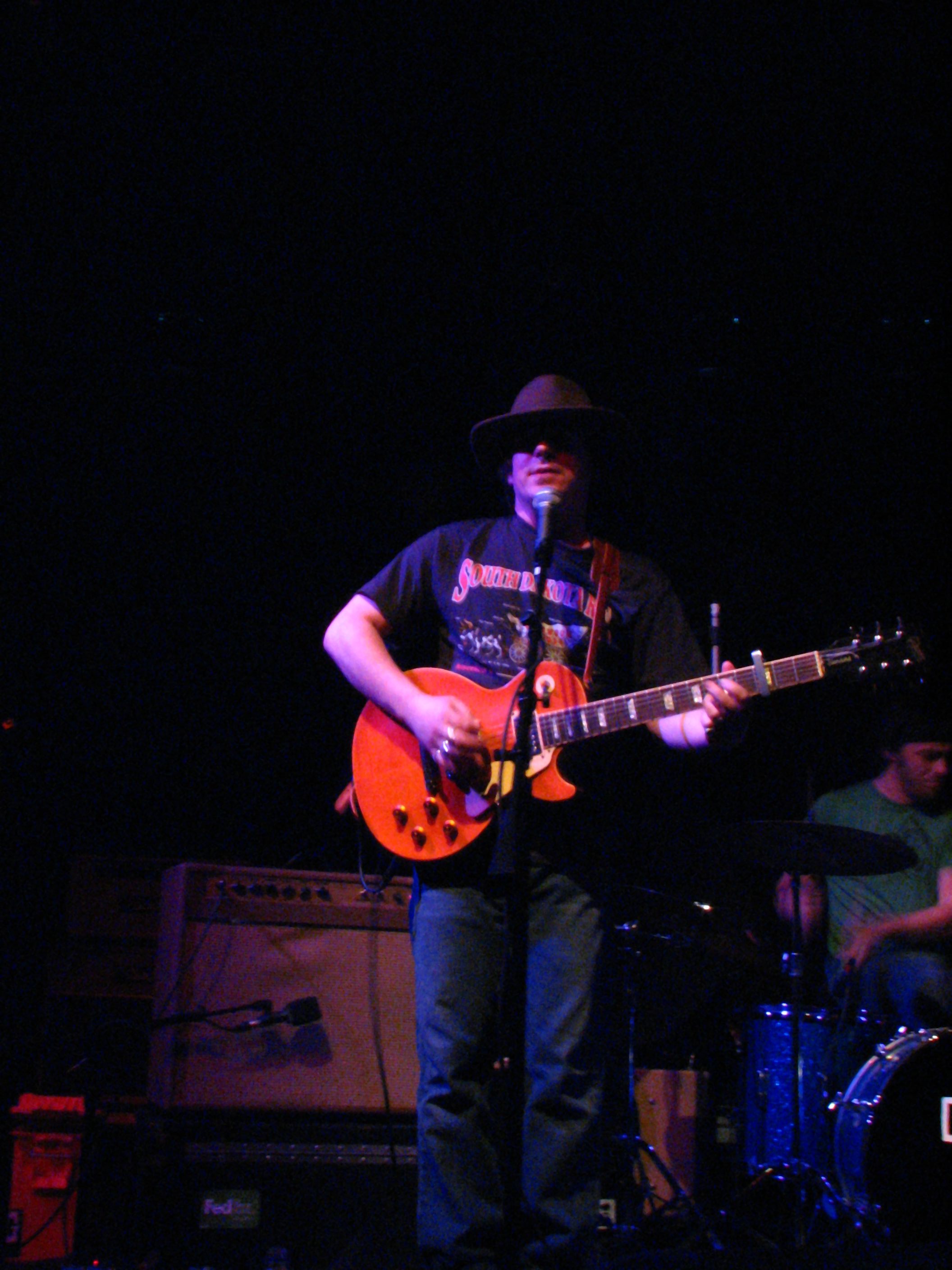
By Corvus
Jason Molina was an Ohio-born songwriter who recorded as Songs: Ohia before leading the country-rock band Magnolia Electric Co. His music brought country and blues into the American independent underground, sometimes with little more than his voice and a guitar, sometimes with a roomful of players. Between 1997 and 2009, he released more than a dozen albums. There were spare recordings, full-band records, collaborations, and always another idea.
That abundance makes the silence that followed difficult to comprehend. Molina stopped touring in 2009 while struggling with severe alcoholism. He died in Indianapolis on March 16, 2013, aged thirty-nine. The years between those dates were full of treatment, interrupted plans and people trying to help. They were also years in which he still wanted to write, to make another record, to answer a friend. Knowing how the story ended can make those intentions seem smaller than they were.
Long before the hospitals, there was a boy picking through the shore of Lake Erie. Molina grew up in a trailer park in Lorain, Ohio, with woods, a beach and the grounds of a water-pumping plant nearby. His biographer Erin Osmon describes him collecting fossils, bones and discarded objects. He and his father once gave a set of rusty wrenches they had found to a maritime museum. With his brother Aaron, he listened to their father’s country and rock records. He watched The Song Remains the Same on VHS. There was room in this childhood for both country records and Led Zeppelin, for a useful old tool and something mysterious washed ashore.
He carried that appetite into adulthood, along with notebooks and very particular pencils. The songs’ owls, ships and unsettled landscapes had a place to come from. So did his pleasure in making things with his hands. Osmon’s account gives industrial Ohio a life beyond the familiar shorthand of a bleak hometown that an artist has to escape. Molina had been looking closely at it for years.
On tour in 1999, he kept a two of hearts in his guitar case. One heart stood for him, the other for his wife, Darcie. He would tape the card where he could see it while he played. During sessions in Scotland for what became The Lioness, it went on the control-room window at Chem 19. Then he left it behind. Months later, returning to redo much of the record, he found it still there. This time he took it with him.
The story, preserved in Osmon’s biography, catches a young husband at work: listening back, finding a recording wanting, and trying again. He had disliked his voice on the first session; his label had reservations too. The Lioness emerged from that unusually substantial revision. Aidan Moffat of Arab Strap, who worked with him in Scotland, remembered how much fun Molina could be. He didn’t spend every hour inhabiting the emotional weather of his records.
Molina could be exacting about work while leaving room for other people. Discussing Didn’t It Rain in a December 2002 interview with Boston’s Weekly Dig, he explained that he had shown the players the chords without rehearsing the songs. He wanted what could happen between those people, in that room, before repetition wore it away. “The complexity in those songs is in their ‘tone,’” he said. His plans were already moving toward a larger band. Talking about the forthcoming Magnolia Electric Co. record, he described letting other singers take the lead on some songs while he sat out.
Steve Albini, who recorded that 2003 album, remembered Molina giving the musicians room and confidence. Scout Niblett and Lawrence Peters took guest vocals. For a listener entering through “Farewell Transmission,” the opening song, that crowded record offers a way into Molina beyond the solitary figure on a sleeve: friends have been invited in, and their contributions matter. Albini’s connection had begun at home. His wife had written Molina a fan letter while working at Chicago’s Reckless Records; Molina answered with tapes of himself singing and playing guitar.
Albini also remembered the extravagant stories. Molina liked a tale to become magical, sometimes embellishing his own history. The engineer’s recollections of their sessions were warm, though he acknowledged the limits of his view. Working together in a studio gave him a different experience from the people travelling with Molina on the road.
John Colpitts, the Oneida drummer known as Kid Millions, had toured with Molina in the 1990s without seeing him drink. He remembered a smiling, excitable man who talked endlessly about Judas Priest, and an ambitious songwriter who worried about getting his good records made while he was young. In Amsterdam in August 2009, Colpitts saw him backstage with Darcie. At first, Molina seemed familiar: charming, funny, recognisably himself. Then his drinking became frighteningly apparent. Colpitts later wrote about leaving shaken. The distance between those two impressions had opened within minutes.
That November, a planned European tour with Will Johnson was cancelled because of Molina’s health. Johnson, the Texas songwriter behind Centro-matic, had recorded an album with him in February 2008; it came out in November 2009. They had already talked about making another.
Johnson remembered a studio full of writing supplies: a thesaurus, coloured paper, Sharpies and Molina’s preferred Mirado Black Warrior pencils. They worked hard together, blunt when a line wasn’t right. Molina asked him to keep the papers safe. After the cancelled tour, they kept in touch by phone and email; in 2011, restrictions at Molina’s accommodation led them to exchange letters.
Elsewhere, his friends were trying to organise a return that didn’t depend on an album. Guitarist Jason Groth recalled sprawling email chains across states, people finding treatment options and greeting Molina’s willingness to enter them with relief. There were calls about new songs, dates arranged, then cancellations. M.C. Taylor of Hiss Golden Messenger offered a room at his family’s house in Durham, North Carolina. He would put a small studio there. Molina could rest and record without demands. He never arrived.
Groth said the members of Magnolia Electric Co. hadn’t considered the band finished. They took jobs, moved away and played with other people, but still hoped Molina would become well enough to join them. The practical work of helping him continued while they waited.
In September 2011, his family publicly described two years of hospitals and rehabilitation facilities in Britain and the United States. At the time, he was working on a West Virginia farm, raising goats and chickens. Whole stretches of a life that listeners had known mostly through release dates were being spent trying to get well.
Molina wrote to friends and fans in May 2012, thanking them for their support and discussing new music. “Treatment is good,” he wrote, “getting to deal with a lot of things that even the music didn’t want to.” He was still trying to write and get well. The work could continue; it could not do everything he needed.
When Autumn Bird Songs appeared later that year, it offered the welcome fact of his voice on a new release. The recordings themselves were older. Packaged with a book of his friend William Schaff’s artwork, the record couldn’t tell anyone how Molina was doing that week. It was possible to welcome the songs and still have no answer to the question that mattered most to his friends: how was he?
One of Molina’s letters suggested that Johnson paint the baseball player Home Run Baker. Johnson finished it in February 2013, but hadn’t told Molina before his death the following month. Writing afterwards, Johnson was careful: he didn’t believe reaching out would have changed what happened. He wished he’d written. The painting had been sitting in the corner, reminding him of his friend. He still needed to tell Jason it was finished.


