Haunted in the best possible way
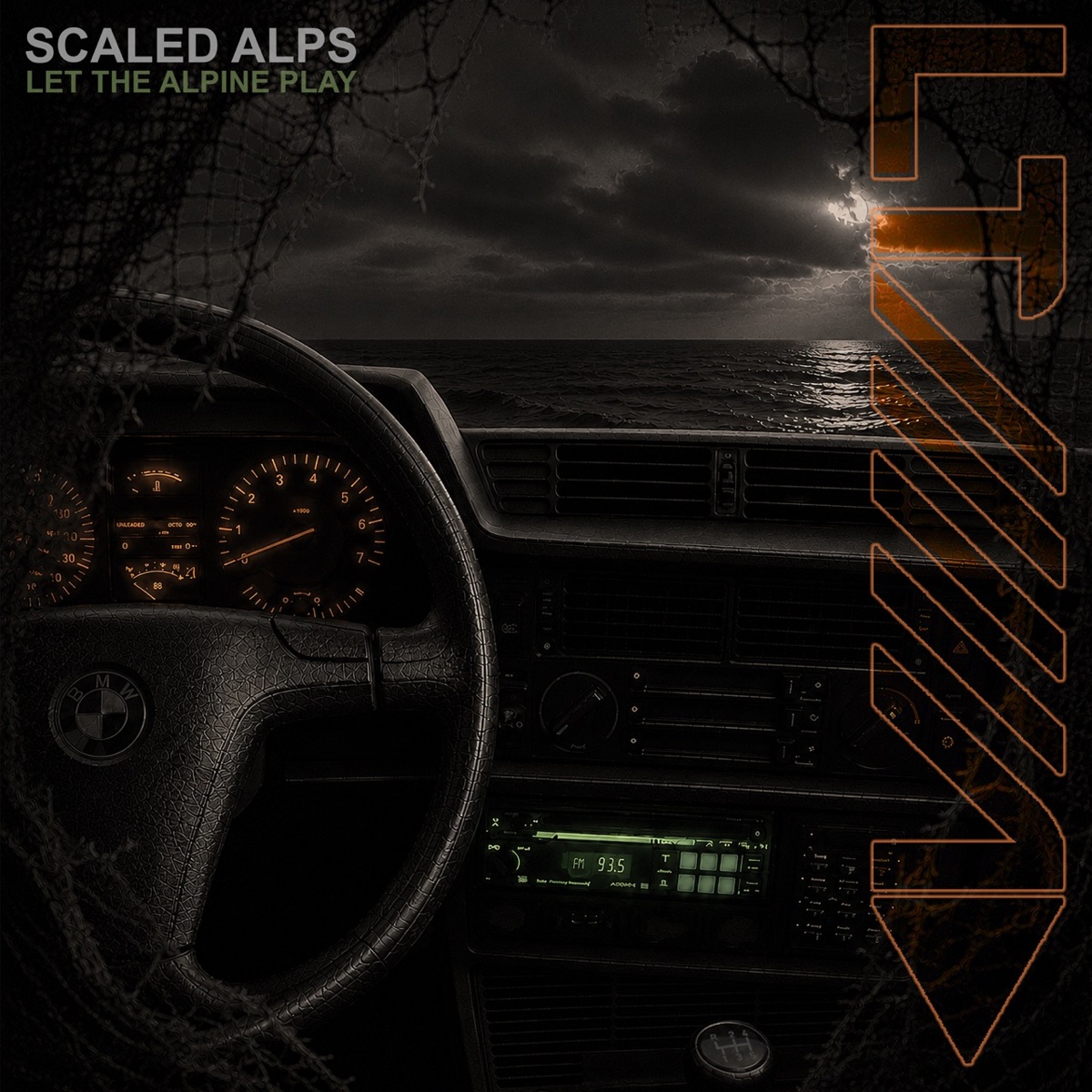
By Margin Tone
Scaled Alps are difficult to describe, and that’s one of the best things about them. Let the Alpine Play defeats the easy shorthand of “another version of” a band you already know. Its dreamy melodies, sudden turns and strange vocal textures have a language all their own. The pleasure is in getting to know it: finding yourself caught by a hook, surprised by what follows, and still feeling that the song knows exactly where it’s going.
This Los Angeles project’s sixteen-song album is full of those discoveries. Piano, bass and guitar move around singer James Quentin Devine’s baritone, while his whispers, breaths and layered singing become part of the arrangements. Each song brings something different, yet the record never feels like a jumble of styles. There’s exceptional taste at work here—a feel for which ideas belong together, how much space they need, and when an unexpected turn will make a good song even better. It’s a joy to hear a band this adventurous make music so consistently melodious.
At the centre are Devine and keyboardist-guitarist Anthony Percoco, who first played together as teenagers in Ohio. After more than a decade out of touch, they reconnected during the COVID lockdowns. Percoco sent a guitar part; Devine recalls taking it for a walk and returning a voice memo of almost an entire song. Earlier releases Very High and Peak Arousal followed that renewed partnership. For Let the Alpine Play, released through their Blue Hell imprint on July 24, 2026, they brought in drummer Sean McCarthy and bassist Steve Fishman, recording with Stewart Tuttle at The Altar in North Hollywood.
The piano matters to their identity. Percoco brings his classical and jazz background to the piano passages, which are among the record’s loveliest moments. McCarthy and Fishman supply movement and weight around those lines. “Space/Time” is a particularly lovely way into the record: a murmured intimacy, a bass part that moves beneath it, and a refrain whose longing is easy to grasp even before every word comes clear. The musicians leave each other room, allowing a beautiful phrase to linger without burying it under the next idea. The music can be wonderfully lush and still retain that clarity.
Devine is an unusually good fit for this music. His baritone can sound drowsy, intimate or faintly disreputable; the layers around it let him become several presences within a song. His whispers and breaths help carry the rhythm; the higher sung parts fill out the harmonies. In “I Think We Met in Setagaya (Maybe It Was Seville),” that layering offers a kind of communal grandeur around words describing a party drifting towards disaster. There’s pleasure in the fullness of the sound, even as the writing keeps looking for what might go wrong.
The surprises aren’t confined to vocal arrangement. “Southerly” moves from incantation towards abrasive release; “Muffler (Chrome Viscera)” puts a much more forceful groove and a sharp instrumental break beside the album’s dreamy passages. The pleasure is in how well judged those turns feel. Those changes give the songs fresh energy, and there’s still a melody to hold onto. Calling this restraint “playing safe” would miss the bravery in trusting an unusual idea and knowing how far to take it.
One of the album’s most revealing moments arrives halfway through an insult. In “T.T.M.S. (Sunyata),” Devine consigns someone to a special place in hell, then adds: “Don’t worry / I’m talking to myself too.” The accusation suddenly includes the speaker. His low voice gives the remark weight, but there’s a dry joke in it as well: he’s found an audience for his grievances, and it appears to be himself.
The words deserve some patience. They’re often compressed, tangled in rhyme or partly absorbed into the vocal texture. Reading them reveals that some apparently sinister flourishes have very ordinary wounds underneath. “Space/Time” begins with distant admiration and eventually makes a small bargain: “If it’s space you want / I have time dear.” That offer is tender, but it doesn’t settle anything. The request to be loved remains. He can offer patience, but he still wants an answer.
“Lemon Zest” makes failed understanding almost embarrassingly plain: “You read my mind / You came up blank.” Its later mention of garnished wages brings money into the troubled relationship; “You brought your body / Forget the rest” leaves physical presence sounding like scant consolation. The eventual abandonment at the altar gives those fragments a recognisable hurt.
Elsewhere, desire is harder to separate from consumption. “Pink Diamonds” puts an ordinary lover beside the wish for a diamond life, then turns towards contempt and threat. “You Got H-O-R-S, You Want E Too?” fills its city with glamour, favours, traps and violence. Neither lyric offers much comfort or a trustworthy narrator. The smoothness of the delivery makes that world seductive enough to enter, which is part of what makes its nastiness unsettling. It’s hard to trust someone who makes cruelty sound this alluring.
Not every verbal tangle opens so readily. “Neo Noir (Stelvio)” enjoys its procession of names, colours and near-rhymes; “Setagaya” can pile up ominous images faster than they acquire a clear relationship. At those points, the sound of the language is easier to enjoy than its implications are to follow. That’s a genuine limit, especially if you come looking for sharply drawn characters or a story with clear consequences. The writing is more often a string of charged encounters and impressions. The hurt in “Lemon Zest” gives its odd phrases something to gather around; some of the more cryptic songs leave that connection harder to find.
The shortest songs can be particularly economical. “Selling It” needs less than forty seconds to connect exhaustion with telling a story to exhaustion with selling a product, before asking to be taken out of the world altogether. Near the album’s close, “Throwaway Lines (Leo II)” brings that fatigue back: time has passed, keeping to oneself has become an act, and even art looks bought and sold. Then comes the joke in the lyric booklet: “She asked me my sign / I said STOP.” It’s a wonderfully bad answer to a hopeful question, and a fitting one for a song about keeping people at a distance.
One small nitpick… The finished sound could stand a small lift in upper-mid presence—a little extra sheen around the detail, rather than a wholesale polishing away of its character. That’s a minor reservation beside the strength of the songs. The arrangements already have definition and variety; making everything brighter or bigger wouldn’t necessarily bring us closer to what makes them interesting.
We love Scaled Alps for that individuality. They make music that feels haunted without resorting to a horror costume. Behind the strange voices are familiar troubles: wanting someone who wants distance, or catching yourself doing the very thing you condemn. Yet the songs are such a pleasure, so melodious and so tastefully put together, that the unease draws you back. You come away wanting more of their music, because another artist’s records won’t quite answer the same need.

