A hundred years after Prince Achmed first reached audiences, Lotte Reiniger’s recollections bring its vast undertaking back to the scale of a garage studio and a handful of working hands.
By Margin Tone
Lotte Reiniger made films by moving small, jointed silhouettes a little at a time beneath a camera. In 1923 she began using that painstaking method for The Adventures of Prince Achmed, a feature drawn from One Thousand and One Nights. It reached audiences in 1926 and is now the oldest surviving animated feature; earlier features made in Argentina have been lost. Its centenary is also an occasion to remember how unlikely the undertaking first sounded to the woman who would make it.
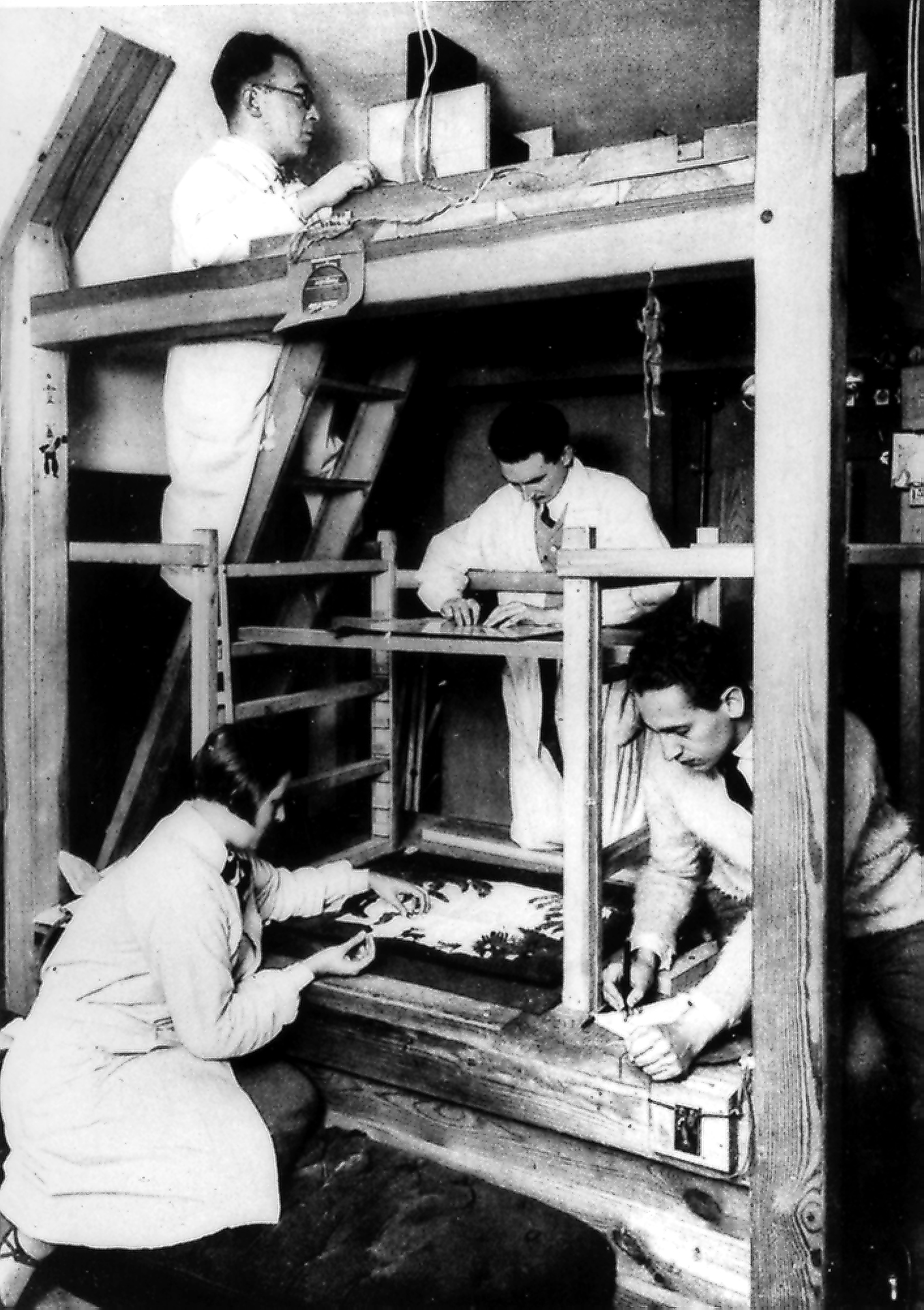
Reiniger had made shorts when the banker Louis Hagen visited her studio and suggested a full-length film. In a later recollection, preserved among her accounts of her working life, she remembered objecting that it simply wasn’t done. A feature meant an enormous extension of work measured in tiny movements. Hagen offered her somewhere to attempt it anyway: the attic of a garage in the vegetable garden beside his Potsdam home.
Reiniger, her husband Carl Koch and the animator Berthold Bartosch moved their work there. Looking back, she particularly valued the free hand Hagen gave them. He had provided a studio without prescribing how they should use it. In her 1972 account, republished by the BFI, she described being allowed to experiment “to our hearts’ content.” That freedom had practical consequences. As the story demanded new effects, the filmmakers had time and space to work them out.
First Achmed needed a body. Reiniger drew him, cut him out and made him movable. The figures lay on glass lit from underneath, with a camera above. Between photographs she adjusted them; projected in sequence, the images would give the movements continuity. She described the resulting illusion as figures acting “by their own free will.” Their apparent independence depended on somebody attending to every change.
Her later instructions make that attention sound approachable. Explaining her usual method in 1972, she listed a figure’s separate parts: head, neck, torso, upper and lower arms, little hands. Cardboard and lead supplied the pieces; thin wire joined them. For a setup, she proposed taking a kitchen table, cutting a hole in it, covering the hole with glass, putting a light underneath and hanging a camera above. She made it sound almost like something to try after lunch.
The work in the garage needed several kinds of ingenuity. Koch oversaw the shooting and technical side. Alexander Kardan and Walter Türck helped Reiniger with figures and animation. Walter Ruttmann devised moving backgrounds and magical effects, while Bartosch worked on waves for a storm at sea.
Reiniger’s account of the storm lets us understand the collaboration at the size of the materials. Bartosch cut templates and arranged them on different levels. She placed the ship on a glass plate between the layers and tried to move it. His sea surrounded her vessel; its passage depended on their work fitting together. In recalling it, she retained that modest verb, tried.
Ruttmann was an artist she regarded as quite different from herself. For a magical battle, she made the transforming figures of a witch and sorcerer while he created abstract backgrounds on his own animation table. It also extended beyond the images. Wolfgang Zeller worked with the group from the beginning, composing passages they tried to match as they animated. Reiniger recalled flute notes, glockenspiel and marches, and the effort to time the filming for an orchestra that would eventually play at a screening.
Eventually there was a film for that future audience to see. Finding a theatre proved harder. In Reiniger’s recollection, exhibitors wouldn’t take it: “it was not done.” The objection had returned after years of work establishing that it could be done.
They arranged a screening themselves. DFF’s filmportal catalogue dates the invited-audience preview at Berlin’s Volksbühne to 2 May 1926. Reiniger remembered the first performance as a great success. A Paris premiere followed in July, and the Gloria-Palast in Berlin opened the film in September. Hagen’s garage had given the artists room to attempt something without knowing how it would work. Three years later, their prince finally had an audience.


