Buried Frequencies / NO. 002
Jawbox’s songs needed four people. After the band stopped, its members found out which parts of that shared life they could take with them.
By Margin Tone
Jawbox were a Washington, D.C., band who took the abrasive guitars and restless rhythms of the city’s punk scene into the major-label music business. In 1993 they left independent label Dischord for Atlantic Records, during the rush to find another underground band that might break through after Nirvana. The chance produced For Your Own Special Sweetheart (1994), the record that brought “Savory” to MTV and remains central to their reputation. Its intricate four-way arrangements helped make Jawbox a touchstone in post-hardcore, where punk’s force met a more exploratory approach to writing songs.
Singer and guitarist J. Robbins, bassist Kim Coletta, guitarist Bill Barbot and drummer Zach Barocas wanted the time and resources to make those songs properly. They sold tens of thousands of records without becoming the mainstream act Atlantic had hoped for. The record company’s disappointment was one part of the story; the musicians’ lives and ambitions were changing too. When they stopped, they had to work out how much of that shared life they wanted to keep.
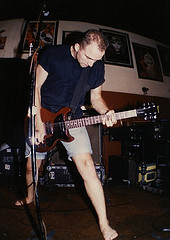
One memory Barbot offered was of a show he was fairly sure they’d played badly.
Coletta had fallen ill while they were touring the South. She’d struggled through a gig in Pensacola, leaving the stage twice to be sick. By Gainesville, she couldn’t play. Cancelling would mean losing the night’s pay and disappointing the people who’d come to see them. Barbot, usually the second guitarist, had about forty-five minutes to learn her bass parts before they went on as a trio.
He knew those songs. He’d helped make them. But Coletta had put things into them that knowing the tunes didn’t quite prepare him to play. He turned up the volume and distortion to cover what he called his “smeary grasp of the material.” Then the audience laughed and cheered. Nobody demanded their money back. Telling MAGNET the story in 2009, Barbot still sounded grateful: “Moments like those made being in the band we were in worth it.”
Jawbox began in D.C.’s punk scene in 1989 with Adam Wade on drums. Barbot joined after their first album, and Barocas replaced Wade in 1992. Robbins had already toured with Government Issue, but writing with Jawbox meant giving up some control. He later described the four of them bringing in pieces and negotiating until they had something they could call a song. The results could surprise the person who’d started it.
“Savory” was one such surprise. Robbins’s original idea was heavier, closer to the songs on their second album, Novelty. Then Barocas supplied a beat he wouldn’t have imagined. Years later, Robbins chose it as his favourite song on 1994’s For Your Own Special Sweetheart, partly for the pleasure of remembering how they’d made it.
Making that record wasn’t always pleasurable. Signing to Atlantic in 1993 gave Jawbox weeks in the studio instead of days, with producer Ted Niceley scrutinising the performances. Barocas wanted to prove himself. He wanted drummers he admired to like it, and he didn’t want to be the new guy anymore.
During “Reel,” he kept slowing down as he moved into the bridge. Someone suggested dropping the click track for that section. He insisted he could do it. He couldn’t, and the failure became unbearable to him. Robbins came over and suggested a break. Barocas pulled his snare off its stand and threw it—not at anyone, he later stressed. He went home early.
His account to Modern Drummer is painfully candid. The drummer capable of changing Robbins’s idea of a song was also the person who couldn’t accept help getting through one passage. The time and money they’d wanted were there. So was the pressure to make something worthy of them.
Atlantic gave them exposure as well as studio time. There was a small push on MTV and an opening tour with Stone Temple Pilots. Jawbox travelled in their old van, trying to keep pace with the headliners’ bus. Sometimes the DeLeo brothers from Stone Temple Pilots helped haul their equipment onstage before they missed their slot. Coletta remembered nights when she thought the audience hadn’t understood them, alongside the excitement of playing the Gorge and Red Rocks.
In a 2024 interview, Coletta put Sweetheart’s sales at around 60,000 copies. “To me, that’s a shitload, but not to Atlantic.” Robbins called it their most abrasive record; the exposure hadn’t turned it into the hit the label wanted. The band had kept its creative control, and the deal paid for work they couldn’t previously afford. It hadn’t made them rich: Robbins recalled still living in a group house, driving the old van and working in a bookstore.
By the self-titled 1996 album, Atlantic had moved them to its TAG imprint. “We were just not a priority to the label. We had to fight a bit to get the record made,” Robbins told DCist. He nevertheless remembered it as their best record and a happier one to make. “Desert Sea” grew out of a jam, each person building on what the others brought. Their confidence in the music had grown while the company’s interest in them had dwindled.
By 1997, Barocas wanted to stop touring, move to New York and go to film school. He was clear that another record remained possible: they could have released it themselves or found another label. He was tired and wanted to put music down for a while. An attempt to continue with another drummer didn’t work out. Barbot resisted making the record company the villain in the story: “Being on Atlantic didn’t break us up, we broke us up.” They’d wanted the chance, taken it, and made records he was glad they’d made. They were also done.
Barbot and Robbins tried again with Burning Airlines, joined by drummer Peter Moffett. Barbot switched to bass, but after the 1999 album Mission: Control!, the others wanted more touring than he did. He described leaving as firing himself. He needed to put his attention into his job, though he wasn’t sure years in a band qualified him for work in web design.
He discovered that plenty of people in the late-1990s web business were learning as they went. In 1999 he co-founded Threespot. A decade later, he was playing bass with friends in a basement, with little desire to take it onstage. The choice to leave one band hadn’t obliged him to stop playing; he could make the commitment smaller.
Coletta and Barbot married in 1997, the year Jawbox split. She kept DeSoto going, studied library and information science, and worked as a teacher and librarian. Jawbox bought back its master tapes, and DeSoto and Dischord reissued Sweetheart in 2009. There were records to look after, but also a working life that no longer revolved around them.
At Landon School, Coletta gave sixth-graders a problem: aliens had abducted them, realised their mistake and forgotten where Earth was. To get home they needed a world map, made with paper, glue and a marker. No scissors. In the school’s account, the children divided the work and tore the continents into shape. It’s a pleasure to find her devising something that might make a roomful of children want to learn geography.
Robbins kept recording other bands. His Baltimore studio, the Magpie Cage, eventually occupied the former Oz Recording space where Jawbox had made Sweetheart. Barocas’s old Ludwig kit became a house kit there—the drums he’d bought with his bar mitzvah money, working on other people’s records while Jawbox was apart.
Barocas found other bands for his own playing, too. In BELLS≥ he used beats that Jawbox had never managed to turn into songs. Robbins’s solo records let him follow a song without negotiating each decision with three other people.
When Jawbox returned, there was no shortcut around the work of being a band. After a one-off television appearance in 2009, they discussed more shows nearly every year, Coletta said; other parts of life kept intervening. Rehearsals finally began in summer 2018 for the following year’s tour. They had to learn their own songs again.
Barocas was surprised by the training it took. He wanted the audience to know they’d tried, but no longer expected to reproduce the drummer in an old video. Other bands had taught him other ways to play. “There’s all kinds of better ways to play than the way you played when you were twenty,” he told Modern Drummer.
A live recording preserves their 2019 Chicago show. The return had an ending of its own: Brooks Harlan replaced Barbot in 2021, and by April 2025 interviewer Kyle Ryan was reporting that Robbins had confirmed Jawbox was finished.
At those reunion rehearsals, Barocas was back behind the old Ludwigs, the kit that had spent the intervening years in Robbins’s studio. He had much less to prove than the young drummer who’d thrown his snare during “Reel.” Of rehearsing together again, he said, “It’s been a pleasure.”
Previously in Buried Frequencies: How Unwound’s homemade studio shaped Leaves Turn Inside You →


