Sylvia Beach offered to publish Ulysses as an honour. The proofs, bills and impatient subscribers show how much work was contained in that offer.
By Margin Tone
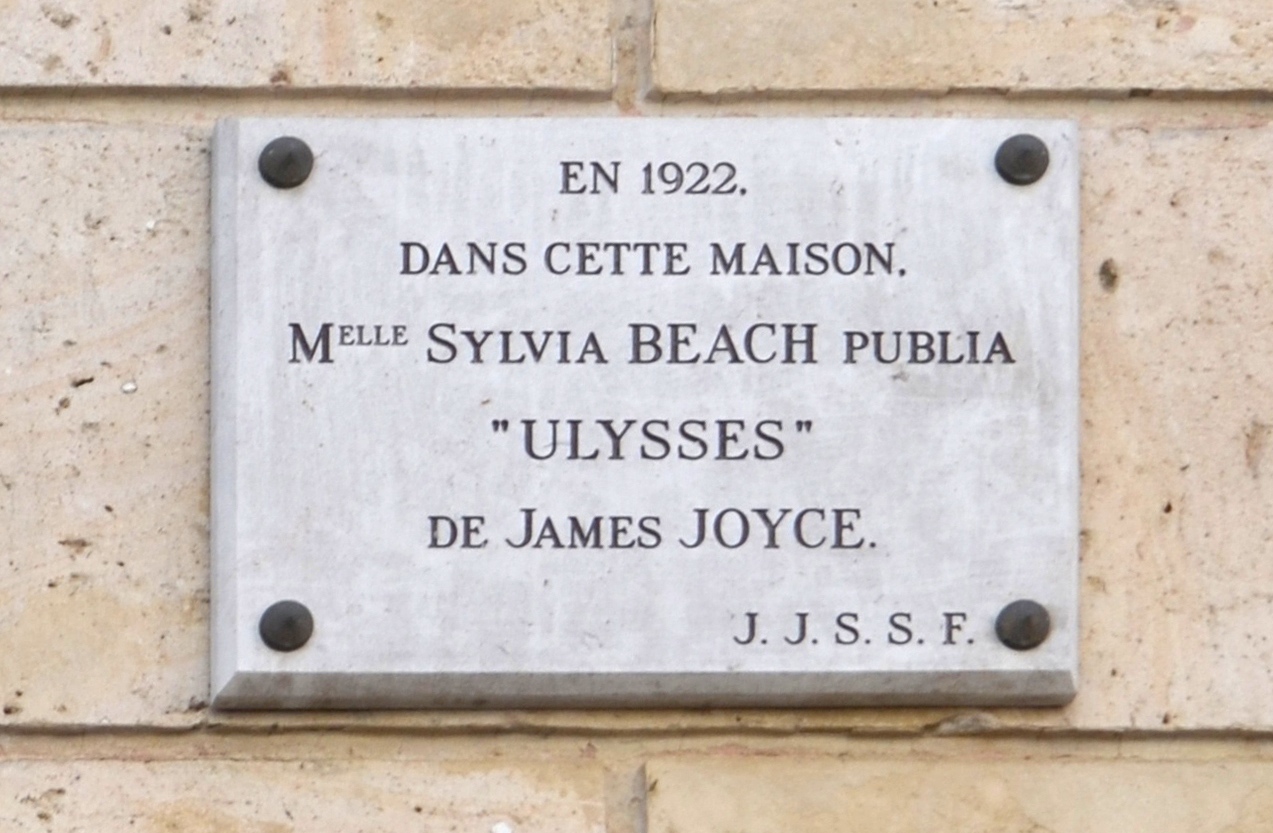
Sylvia Beach opened Shakespeare and Company in Paris in 1919 to sell and lend English-language books. Within two years she had offered to publish James Joyce’s Ulysses, although she had never published a book before. The offer was generous. What followed would test its meaning every time Joyce added to the proofs, a printer’s bill arrived or a reader asked where the promised novel had got to.
Joyce had become a regular visitor after they met in 1920. In New York, Margaret Anderson and Jane Heap had been serializing Ulysses in The Little Review. An obscenity prosecution stopped them; their defeat in court left him convinced that the complete novel wouldn’t find a publisher. “It occurred to me that something might be done,” Beach wrote in her memoir. She remembered asking, “Would you let Shakespeare and Company have the honor of bringing out your Ulysses?” In her memoir account, reproduced by the University at Buffalo’s exhibition catalogue, he accepted immediately and joyfully.
She put the offer as though the favour would be his. Her description of her own qualifications was less ceremonious: “Undeterred by lack of capital, experience, and all the other requisites of a publisher, I went right ahead with Ulysses.” Fortunately, she had someone to ask. Her partner Adrienne Monnier ran the French bookshop La Maison des Amis des Livres and had encouraged her to open Shakespeare and Company. In 1921 Beach moved across the street from her, to 12 rue de l’Odéon. Monnier recommended Maurice Darantière, her printer in Dijon, and helped her work out a limited edition.
The promised book needed buyers. Beach sent hundreds of subscription circulars to individuals and bookshops around the world. Readers could choose among three kinds of paper, with Joyce’s signature in the most expensive copies. Joyce supplied names to approach; his English patron Harriet Shaw Weaver helped gather prospective subscribers. Beach’s offer was becoming a network of requests, introductions and orders. Monnier’s design for the prospectus survives in Beach’s papers.
The prospectus promised the novel “complete as written.” As curator Clare Hutton explains in the Harry Ransom Center’s account of the edition, even Ezra Pound, a champion of Joyce’s work, had removed words from the typescripts he handled for The Little Review. Beach was undertaking to print what the author wanted to say. He was still discovering how much that would be.
Darantière was instructed to supply as many proofs as Joyce wanted. Revision continued during printing, sending the typesetters back over their work as the novel expanded. Beach later recalled Joyce saying he had written a third of Ulysses on the proofs. She remembered putting “every single centime aside” for the bills. The freedom offered to one person became an accumulating obligation for another.
Readers, meanwhile, had ordered a book. T. E. Lawrence, who wanted two copies, was among those asking what had happened. Beach remembered having no time to explain that she too was fighting a battle, though not in the desert. There was another enquiry to answer and still no finished book to send.
Joyce wanted publication on his fortieth birthday, 2 February 1922. On 28 January, Darantière sent a telegram saying the first copies wouldn’t be ready until the fourth. After months of work, the date was going to be missed by two days. The printer managed to get two copies through in time. On the morning of 2 February, Beach gave Joyce number one. Number two belonged to Shakespeare and Company.
The first edition ran to a thousand copies and, according to Buffalo’s catalogue, sold out by late March. Orders still had to become deliveries. That month the lawyer John Quinn warned Beach that instructions had been issued in America to prevent imports and confiscate copies. He advised her to send them slowly. Publishing the book in Paris had brought it into existence without ensuring that its readers could receive it.
The shop had its own continuing demands. Princeton’s transcription of the publication-day accounts records lending-library renewals and fines, sales of other books and a payment for work on the shutters. Someone bought Three Men in a Boat. Joyce’s enormous undertaking had to share the day with customers who needed something else to read.
Joyce thanked Beach for “all the trouble and worry you have given yourself about my book during the last year.” She kept the note, along with proofs, letters and other traces of publishing it. The finished volume could travel under his name. In her papers, the work of getting it printed remained visible too.


