Liner Notes After Dark / NO. 001
Courtney Love, Kurt Cobain and Billy Corgan made music through romance and rivalry. Their recollections lead from a backstage joke in 1991 to a collaboration that kept surviving its quarrels.
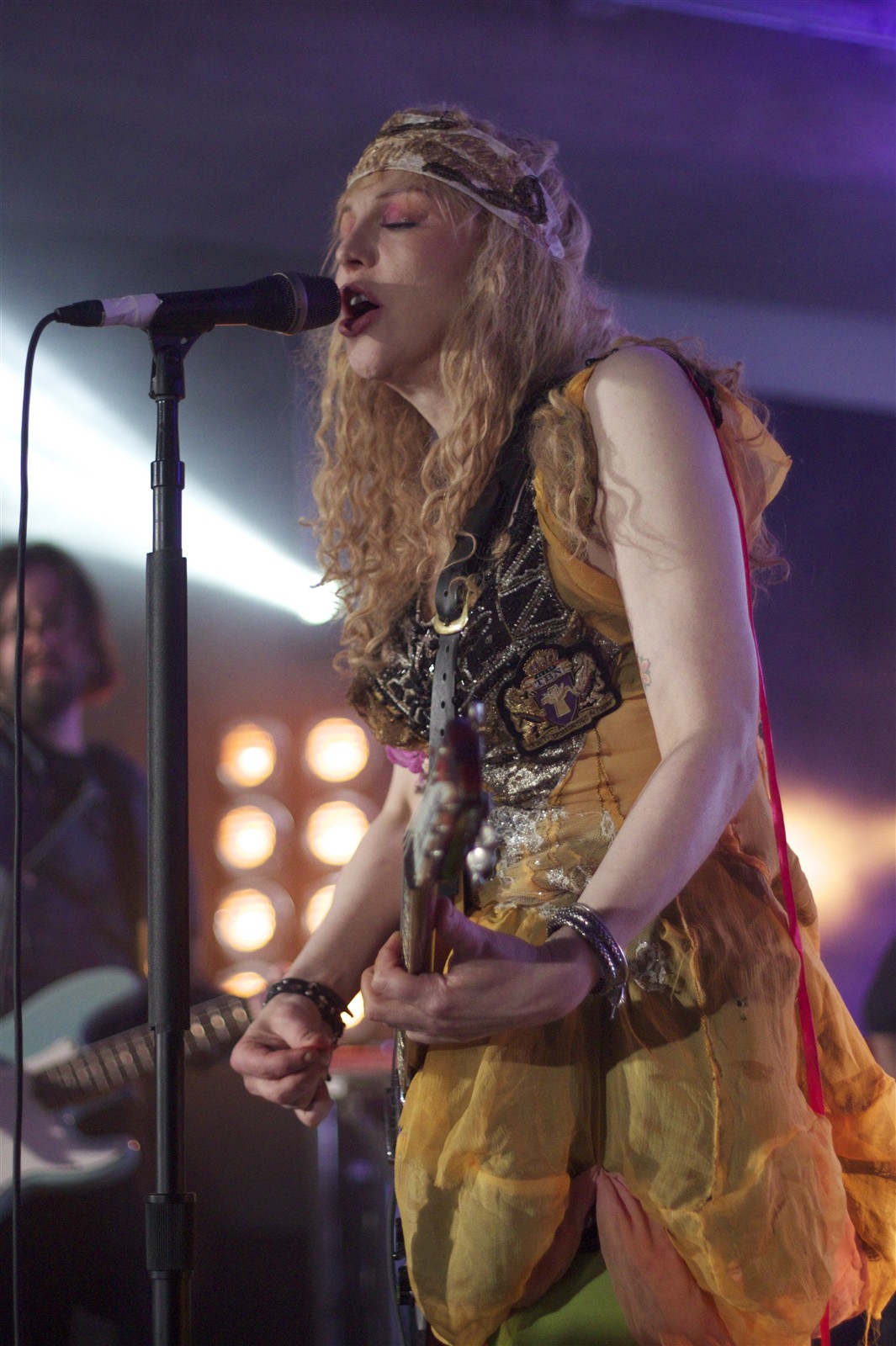
By Margin Tone
Courtney Love sang and played guitar in Hole; Kurt Cobain led Nirvana, and Billy Corgan led the Smashing Pumpkins. In the early 1990s, they were making records that would bring them fame while getting tangled up in one another’s lives. Love would marry Cobain. Her shorter relationship with Corgan became a much longer, sometimes combative collaboration.
After Courtney Love and Billy Corgan left the room, Kurt Cobain wrote on the wall.
“Courtney + Gish.”
It was September 1, 1991, backstage at a festival in Rotterdam. Filmmaker David Markey, travelling with Sonic Youth and Nirvana, recorded the incident in his tour diary. Love had arrived with Corgan and introduced him around. Gish was the title of the Smashing Pumpkins’ debut album. Cobain had substituted the record for the boyfriend. Markey remembered him smiling.
Nirvana’s Nevermind hadn’t come out yet. Love was seeing Corgan; she and Cobain weren’t yet a couple, as Markey recalled in SPIN’s oral history of the tour. For the moment, Markey had caught a backstage joke at Corgan’s expense.
Corgan had been the one to pursue Love. In his later account to Howard Stern, he saw her photograph, contacted her label and arranged for her to stay at his Chicago apartment. By October 1991, according to the story he told Alternative Press two years later, she had come to see him again.
That visit ended badly. Corgan said he became upset and made her leave; she went to a Nirvana show and became involved with Cobain. He objected to her version of the trip, which he said made Nirvana its purpose all along. Even while insisting on the chronology, he praised her intelligence and raw talent. She’d affected his writing, and he wasn’t willing to dismiss her along with the relationship.
Love’s account of falling for Cobain has its own untidy little room. Recalling the writing of “Doll Parts” in 2020, she described retreating to a bathroom in Massachusetts, running out of paper and writing lyrics on her arm while people knocked on the door. She said she had heard that the man she was sleeping with was also seeing other women. The song was her furious bid to be chosen. The man was Cobain.
Love and Cobain married in February 1992 and were expecting a daughter. The difference between their bands’ fortunes had become a subject they could joke about, with a sting left in the joke.
In Belfast that June, Select’s David Cavanagh watched their backstage domestic comedy. Love offered Cobain food; he resisted, then accepted a piece of sandwich from her hand. Cobain said they played music together at home, including Stevie Nicks and Tom Petty’s “Stop Draggin’ My Heart Around.” Love pointed out that she and her husband had once been almost peers. “For about a month,” he replied.
Hole’s singer could be beside her husband and still be measured against him. That day they were also talking about the child they would have together, already calling her Frances. Frances Bean was born that August.
Corgan, meanwhile, had to make the record after Gish. Nevermind had changed the scale of what a band like his could achieve. He would later explain to American Songwriter that the success of Nirvana and Pearl Jam helped push him toward tighter pop writing. Love was involved in that change, too. In his recollection, she challenged the vagueness of his lyrics during a phone call: why did the songs contain so little of the person she actually talked to?
He identified “Today,” which he said grew out of severe personal distress, as a breakthrough. She could affect his work by arguing with it.
Siamese Dream arrived in 1993. Corgan later said it drew on Love, his wife and imagined relationships, resisting the assignment of individual songs to individual women. The connection was important to him without supplying a key to every lyric.
Love wanted music from Cobain, too. She told Rolling Stone’s David Fricke that she heard him working on “Heart-Shaped Box” in a closet and asked whether he needed the riff. He refused emphatically. The memory has the practical comedy of two writers under one roof, one hearing something good through a door and trying her luck.
In that late-1994 interview, she also described the strain of caring for him and putting her work aside, alongside the affection and energy she received from him. She had wanted their life together despite friends’ warnings about what it might cost. Hearing him play the Meat Puppets’ second album had won her over to a record she’d disliked. Music was part of what they gave one another at home as well as what took them away from it.
Cobain had his own version to give. In his interview published by Rolling Stone in January 1994, he complained that the press kept depicting a miserable man. He described happiness in his family and his work. Speaking about Frances, he said that even a divorce wouldn’t excuse hostility between her parents in front of her. His ambition for their home was grounded in what he and Love had missed growing up: he wanted their child to feel loved.
He was talking about a future he wanted. He died by suicide in April 1994. The marriage was two years old.
Live Through This was released on April 12, 1994, four days after Cobain’s body was found. The songs Hole had made before his death reached listeners who already knew the ending of the marriage. “Doll Parts,” born out of wanting to be chosen, now had to pass through that knowledge.
Corgan was still there. After Hole bassist Kristen Pfaff died that June, he recommended Melissa Auf der Maur to the band. The ex-boyfriend had helped her find someone she could take on the road.
Corgan described himself and Cobain as “nemeses” in a November 1994 Rolling Stone interview. They hadn’t been close. He nevertheless spoke of sadness at Cobain’s death and of recognising a kinship in their isolation. His relationship with Love would continue to include arguments about the man neither could now answer.
Corgan joined Love to work on Hole’s next album, Celebrity Skin. She told triple j’s Richard Kingsmill in 1998 that she had become stuck during the writing. Corgan could help with the pop craft she wanted, and their history gave him unusual permission to challenge her. Working with him also meant submitting songs to someone she described as a general and a maths teacher who wouldn’t give her the answer.
By Love’s count, he spent twelve days on an album that took about two years. She praised his brilliance, acknowledged a “deep love” between them and rejected the notion that he was Hole’s mastermind. The distinction mattered: she had asked a collaborator for help, and could value what he brought without surrendering the record to him.
Corgan shared music credits on five tracks, including “Celebrity Skin” and “Malibu.” Love was also deciding what she wouldn’t share. Asked by SPIN in 1998 to explain the new record’s personal meaning, she refused to hand over her relationship with Cobain for the interviewer to interpret.
The working bond with Corgan didn’t stay peaceful. Around the release of Nobody’s Daughter in 2010, he publicly objected to Love using songs they had worked on together, saying he hadn’t given permission. His attacks widened into a contemptuous suggestion that she retire and live on Cobain’s money. In a dispute over a new record, Cobain was suddenly between them again.
The shared songs eventually brought them onto the same stage again. At the Pumpkins’ thirtieth-anniversary show in New Jersey in August 2018, Love sang “Celebrity Skin” and “Malibu” with the band. By April 2026 she was appearing on Corgan’s podcast, The Magnificent Others, discussing old friendships and grievances.
Corgan and Love retained the awkward privilege of being able to answer each other. They could dispute a credit or a memory, return to a song and perform it together. Cobain remained in the records and recollections, including the joke he’d written while two people he knew were out of the room.
Back in Rotterdam, he had written two words and a plus sign. Thirty-five years later, the people left alive were still talking.


