An artist’s book can be kept, handled and returned to at home. Printed Matter works on the less intimate problem that makes those encounters possible: helping small editions find readers.
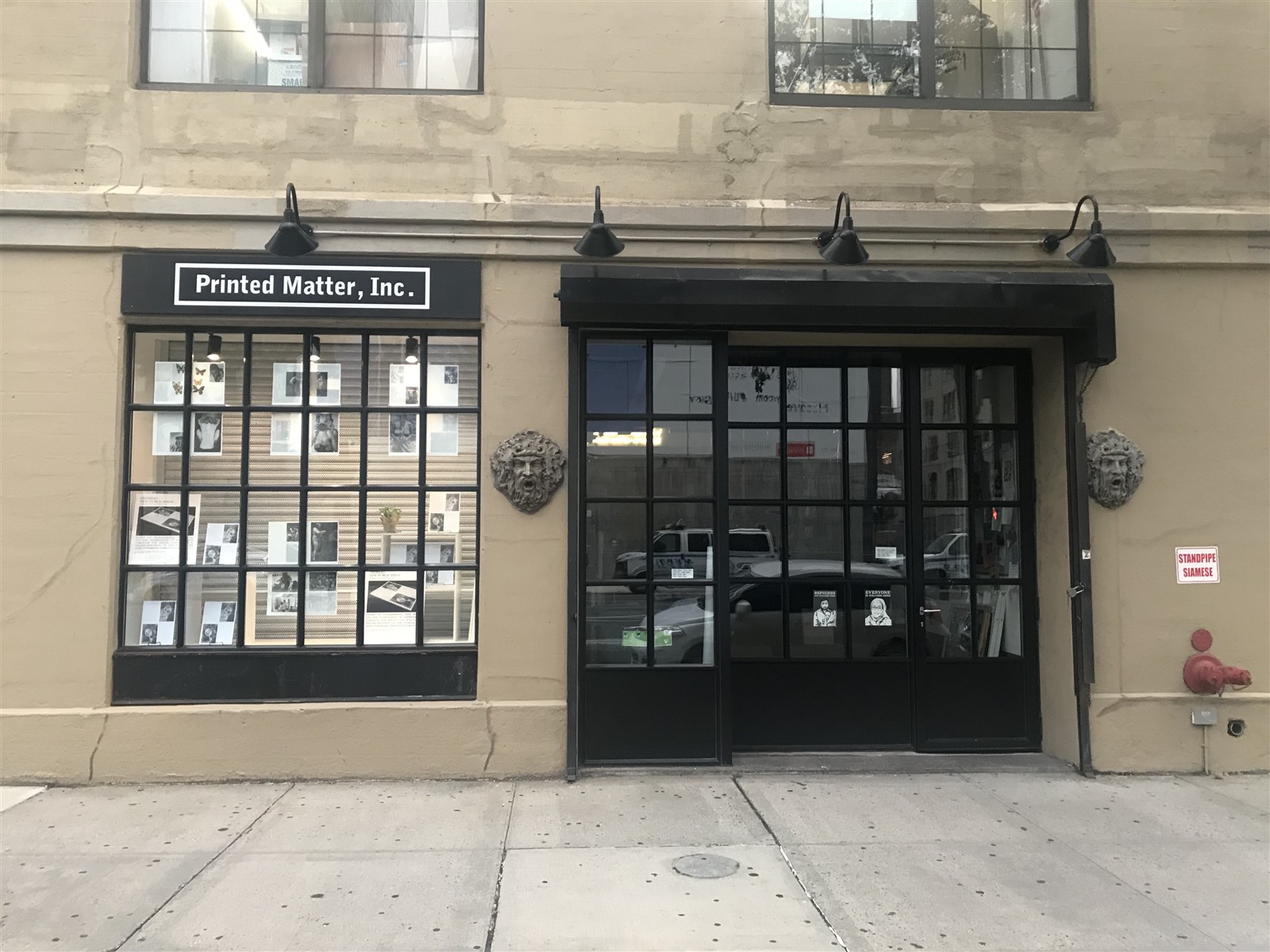
By Margin Tone
Printed Matter, the New York nonprofit bookstore and distributor, specialises in books that artists make as artworks. The order of the pages, the meeting of pictures and words, even a pause left by a blank spread can belong to the work. These books offer an intimate possibility: someone can take the art home, return to it at will and decide how slowly to read. For the artist, the harder part can be getting a copy into that person’s hands.
The organisation emphasises inexpensive publications produced in enough copies for many people to own them. That ambition connects the form of the artwork to the practicalities of distribution. A finished edition can sit in boxes beside its maker’s desk. The work is ready; its readers may not yet know it exists.
Printed Matter was addressing that problem before it had a public location. In 1976 it began producing mail-order catalogues, including a folded flyer and a staple-bound booklet. A reader far from a major arts centre could discover a publication there and order it by post. The modest scale of those catalogues suited the transaction: a printed object describing other printed objects, with a means of getting one sent to you.
The shop, online catalogue and art fairs continue that work. Printed Matter also supplies collecting institutions, including museum and university libraries. For a small publisher, the value lies partly in reaching people outside the circle who already know the artist. A specialist shop brings readers looking for the form itself, willing to encounter someone unfamiliar through a book.
That form gives the encounter its own pace. Two photographs on facing pages invite comparison; a repeated phrase can change as the surrounding images change. The reader may linger, skip ahead or turn back. Printed Matter’s explanation of the artists’ book locates the artwork in these choices, distinguishing it from a conventional exhibition catalogue that documents art displayed elsewhere. The publication must have something to do as a book.
Selection therefore depends on seeing the object. Artists and publishers around the world can submit work, and the ordinary process asks for one finished physical copy and a review form. A staff committee considers execution, fit with Printed Matter’s purpose and what is already in stock. Paper, printing and binding affect how the pages behave in a reader’s hands; a PDF cannot convey every decision.
Sending that copy is a commitment before there is any promise of acceptance. The artist pays to produce and deliver it, and submissions aren’t returned. Conventional exhibition catalogues, fiction, nonfiction and literary magazines generally fall outside the programme’s scope. Open submissions give an unfamiliar artist a route into consideration, within a specific editorial focus.
Acceptance leaves another calculation to make. Under the standard retail terms in Printed Matter’s submission policy, books are typically sold on consignment: the supplier provides stock and is paid when a copy sells. The supplier sets the cover price and receives half of it. A $20 sale would return $10, from which printing and delivery costs must be covered.
The arrangement lets the shop carry a wider range than it could afford to buy outright. It leaves the artist or publisher responsible for production costs before sales arrive. Larger print runs can spread those costs across more copies, but those copies must then find buyers. Small runs and expensive postage can make the wish to keep a book affordable difficult to fulfil.
Printed Matter brings an audience to that uncertain calculation. Its readers can discover a book without knowing its maker, and an artist can reach beyond the people they already know. The ambition remains close to the folded flyer of 1976: give someone a reason to order a copy, then let the pages do their work.


